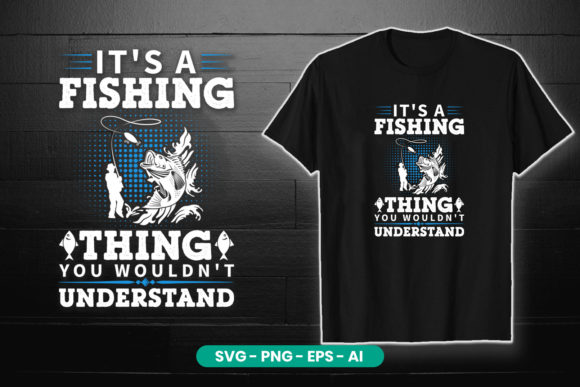
Funny Fishing T-Shirt Design Vector Review
As a designer who spends more time staring at stitch density charts than actual fishing holes, I approach every new T-Shirt Designs asset with a healthy dose of skepticism. The market is saturated with generic fish silhouettes and cliché slogans that look identical on every piece of merchandise from big-box retailers to local craft fairs. However, when I first pulled up the Funny Fishing T-Shirt Design Vector, something caught my eye. It wasn’t just the humor—though the "It’s A Fishing Thing You Wouldn’t Understand" concept is a classic for a reason—but the potential for how this graphic translates into physical form.
I don’t review files; I review finished products. My job is to determine if a design holds up under the tension of an embroidery machine, looks good on a customer’s chest, and adds enough perceived value to justify a sale. So, let’s put aside the digital preview and talk about what happens when this vector becomes a tangible handmade product.
The First Impression: Mood and Layout
The immediate appeal of this Graphics category entry lies in its conversational nature. Unlike abstract patterns or simple logos, text-heavy designs like this rely entirely on legibility and personality. The phrase itself acts as a filter. It immediately signals to the buyer that this isn’t just apparel; it’s a badge of identity. For an embroiderer, this means the typography needs to be robust. If the letters are too thin or the spacing too tight, they will disappear into the fabric weave.
Visually, the design suggests a casual, rugged aesthetic. It feels right at home on heavy cotton or denim rather than delicate silk. This dictates our material choices early on. We aren’t talking about fine dress shirts here; we are talking about gear for people who actually go outside. The mood is relaxed, slightly humorous, and deeply personal. It invites conversation, which is exactly what you want in a custom apparel item. When someone wears this, they are inviting their friends to ask, "So, what part don’t I understand?" That engagement factor is priceless for any craft business.
Real-World Application: Where Does It Shine?
I recently considered using this design for a batch of personalized gifts for a client who runs a local tackle shop. Instead of the usual boring logo placement, we decided to test the Funny Fishing T-Shirt Design Vector on a few different mediums. Here is how it performed in those real-life scenarios.
- Sweatshirt Embroidery: This is the sweet spot. The thicker fabric provides a stable base for the stitches, allowing the design to pop without pucker. The contrast between the thread and the heather grey fleece makes the text crisp. It feels substantial, like a high-quality holiday gift or a cozy winter essential.
- Tote Bag Design: Canvas totes are a staple for Etsy sellers. Using this design on a sturdy canvas tote creates a perfect blend of utility and humor. It turns a simple shopping bag into a statement piece. Just ensure you use a cut-away stabilizer behind the canvas to prevent the weight of the threads from pulling the handles down over time.
- Embroidered Patch: Converting this vector into a patch opens up a whole new market. Patches allow for applique techniques, where you can add texture and dimension. Imagine a satin-stitched outline around the text with a fill stitch background. This adds a premium feel, making it suitable for jackets, backpacks, or even baby embroidery projects where durability is key.
- Aprons and Kitchen Towels: Don’t overlook the kitchen. Fishermen often double as grill masters. Placing this design on a heavy-duty apron or a tea towel adds a touch of personality to the workspace. It’s a great personalized gift for weddings or housewarmings, bridging the gap between hobby and home life.
Technical Considerations and Pitfalls
Not every surface is created equal, and relying solely on the digital vector can lead to costly mistakes. There are specific areas where this design requires careful handling.
Small Hoop Sizes: If you attempt to digitize this for a very small hoop, such as one used for socks or tiny baby items, you risk losing the nuance of the lettering. The text might become too dense, causing the needle to break or the fabric to pucker excessively. Always check your hoop size constraints before committing to production.
Textured and Stretchy Fabrics: While heavy cotton works well, stretchy fabrics like performance polyester blends can be tricky. Without proper stabilization, the stitch density can distort the fabric, warping the message. Similarly, highly textured fabrics like bouclé or thick wools can hide the finer details of the design. In these cases, a simpler version of the graphic might be more effective than the full vector.
Dense Stitch Areas: If the design includes large blocks of fill stitch, you must consider the weight. On dark fabric, using light-colored threads for large fills can sometimes look muddy or lack definition. Conversely, dark threads on black fabric require a high-quality topstitch or satin stitch outline to create separation. Always test your thread colors against your fabric swatch under natural lighting.
Designer’s Notes for Execution
Before you upload this file to your machine and start stitching hundreds of units, follow these practical steps to ensure quality control.
- Test on Scrap Fabric: Never run a commercial order without a test run. Use the exact fabric and stabilizer combination you plan to sell. This reveals issues with puckering, thread tension, or color contrast that aren’t visible on screen.
- Check Black and White Mockups: Convert your design to grayscale. This helps you see if the contrast levels are sufficient. If the text disappears in black and white, it will likely struggle in color too.
- Inspect Small Details: Zoom in on the corners of the letters. Are there any tiny floating bits that might not catch the thread? Remove them in your editing software to save time and reduce errors.
- Confirm Licensing: This is critical. Before selling any finished product or digital embroidery file, verify the license terms. Some vectors are for personal use only, while others allow commercial distribution. Protect your small shop product business by ensuring you have the right to sell.
- Stabilizer Selection: For woven fabrics, tear-away may suffice. For knits or stretchy materials, cut-away stabilizer is non-negotiable to maintain integrity after washing.
Final Verdict
The Funny Fishing T-Shirt Design Vector is more than just a cute graphic; it is a versatile tool for any embroidery project aimed at outdoor enthusiasts. Its strength lies in its relatability and broad appeal. Whether you are creating a commercial embroidery line for a boutique, adding a unique touch to giftability items, or simply making a personalized gift for a friend, this design delivers.
It performs best when paired with stable, medium-to-heavy fabrics and executed with attention to detail regarding stitch density and stabilization. By avoiding the pitfalls of small hoops and unsuitable textures, you can transform this vector into a high-value finished product that customers will wear with pride. For designers looking to expand their design assets with something that resonates emotionally and visually, this is a solid addition to your library.